

Instagram is testing new ways to give users more control over what appears in their feeds. The latest Instagram algorithm controls make it easier to customize content recommendations through several experimental access points, including drag-down panels, in-stream controls between Reels, lower function bar options, and conversational prompts. These updates could make Instagram’s recommendation system more transparent and personalized, although similar control features on social platforms have historically seen relatively low adoption.
What Are Instagram’s New Algorithm Control Features?
Instagram is expanding its “Your Algorithm” control panel with multiple new access points designed to make content customization more intuitive. According to Instagram Chief Adam Mosseri, the platform is testing four primary features that would allow users to refine their recommendations without navigating through complex settings menus.
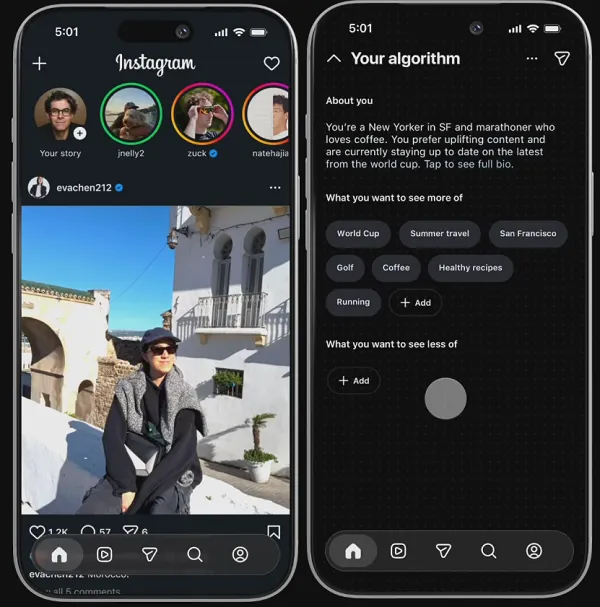
The first feature introduces a simplified drag-down gesture from the home screen that opens the Your Algorithm panel directly. This interface displays topics the system has associated with your account based on engagement patterns, allowing you to add or remove interests with minimal effort. The goal is to reduce friction between recognizing unwanted content and actually doing something about it.
The second innovation places algorithm controls directly between Reels in your feed. Rather than interrupting your viewing experience, these controls integrate seamlessly into the content stream, making it easier to signal preferences in real-time. This approach acknowledges that users are most motivated to adjust settings when they encounter content that misses the mark.
How Will the In-Stream Controls Work?
The in-stream controls represent Instagram’s most ambitious attempt to make algorithm customization feel natural rather than technical. When scrolling through Reels, users would encounter periodic prompts asking whether they want more or less of specific content types.
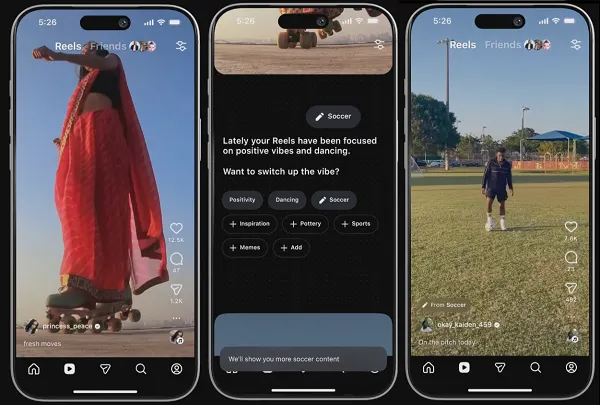
A lower function bar option would appear on recommended Reels, providing quick access to interest signals without leaving the video. This feature builds on existing feedback mechanisms like “Not Interested” but offers more granular control over topic preferences. Users could theoretically shape their feed while maintaining their scrolling momentum, which is critical for platforms competing for attention.
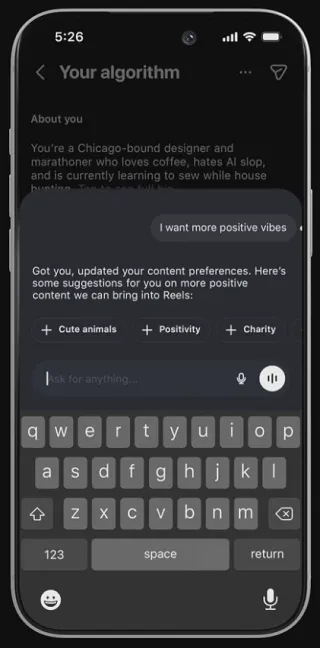
The conversational prompt feature takes a different approach entirely. Instead of requiring users to identify and select specific topics, Instagram would ask natural language questions about content preferences. This AI-driven interface could interpret responses like “I want to see more outdoor activities” and translate them into algorithmic adjustments without manual topic selection. Mosseri envisions this making the algorithm “feel like something you talk to rather than something that happens to you.”
Why Is Instagram Introducing These Controls Now?
Instagram’s timing reflects growing pressure from users who feel increasingly disconnected from their own feeds. Many users have requested a chronological feed showing only content from accounts they follow, but Meta has consistently resisted this option because algorithm-driven feeds generate significantly higher engagement metrics.
The Your Algorithm controls represent a middle ground—offering perceived control without fundamentally changing the recommendation-first approach that drives platform usage. Research from Pew Research Center indicates that while users express concerns about algorithmic curation, they simultaneously benefit from personalized content discovery that keeps them engaged longer than chronological feeds.

The platform is also responding to competitive pressure from TikTok, whose highly accurate recommendation engine has set new standards for content personalization. By making algorithm controls more visible and accessible, Instagram can address user concerns about transparency while maintaining the engagement benefits of AI-driven curation. For creators looking to expand their Instagram presence, understanding these algorithm controls becomes increasingly important for reaching target audiences.
Will Users Actually Use These Algorithm Controls?
Historical data suggests that despite vocal demand for control features, actual usage rates remain surprisingly low. Meta has introduced similar customization tools for security settings, data protections, and feed preferences, yet the majority of users never engage with these options.
This pattern reflects a fundamental tension in social media usage: people want the reassurance of control without the effort of exercising it. According to Sprout Social’s research, most users prefer passive scrolling experiences where the algorithm learns from their behavior rather than requiring manual input. TikTok’s success has reinforced this preference, training users to expect accurate recommendations without configuration.
Mosseri acknowledged this uncertainty, noting that “some of this is testing now, some is coming soon, some might not work.” The platform will likely monitor engagement metrics closely—if manual algorithm editing reduces time spent in the app, Instagram may scale back the visibility of these controls regardless of user feedback. If you’re interested in optimizing your content strategy, learning how to see more of what you want on Instagram can help you better understand these recommendation systems.
What Are the Limitations of Algorithm Control?
While Instagram’s new features offer more transparency, they don’t address fundamental concerns about algorithmic curation. The controls allow users to refine recommendations within the algorithm-driven framework but don’t provide an option to disable algorithmic ranking entirely.
| Feature Type | User Control Level | Likely Adoption Rate |
|---|---|---|
| Drag-Down Panel | Medium – Topic Selection | Low to Medium |
| In-Stream Controls | High – Immediate Feedback | Medium |
| Function Bar Options | Medium – Quick Signals | Medium to High |
| Conversational Prompts | Low – AI Interpretation | Low |
Meta’s business model depends on maximizing engagement, which algorithm-driven feeds accomplish more effectively than user-curated experiences. The company is unlikely to implement changes that significantly reduce time spent on the platform, meaning true user control remains limited by commercial imperatives. Critics argue these features provide the “illusion of control” rather than meaningful agency over the Instagram experience.
Additionally, the effectiveness of these controls depends on Instagram’s willingness to honor user preferences even when they conflict with engagement optimization. If the algorithm determines that showing certain content types increases session duration, it may override manual preferences—a tension that Instagram hasn’t fully addressed in its announcements.
How Should Creators Adapt to These Changes?
For content creators and brands, Instagram’s algorithm controls introduce both opportunities and challenges. As users gain more ability to filter content, creators must ensure their material aligns with the specific interests their audience is actively selecting.
The most effective strategy involves creating highly targeted content that clearly signals its topic and value proposition. When users can explicitly tell Instagram they want more fitness content, cooking tutorials, or travel inspiration, creators in those niches benefit from more accurate audience matching. However, this also means generic or unfocused content may struggle to find distribution as users refine their preferences.
Creators should also recognize that despite these new controls, the vast majority of users will continue relying on passive algorithmic curation. According to Social Media Examiner, engagement signals like saves, shares, and watch time remain the primary factors determining content distribution. Focusing on these fundamental metrics will likely yield better results than optimizing for users who manually adjust their algorithm settings.
What Does This Mean for Instagram’s Future?
Instagram’s algorithm control experiments signal a broader shift toward transparency in social media recommendation systems. As regulatory pressure increases and users become more sophisticated about algorithmic curation, platforms must balance engagement optimization with user autonomy.
The conversational AI approach represents the most forward-looking element of Instagram’s strategy. As natural language processing improves, social platforms may evolve from passive content streams to interactive recommendation assistants that users actively collaborate with. This could fundamentally change how people discover content, shifting from implicit behavioral signals to explicit preference conversations.
However, the success of these features depends entirely on whether Instagram can make algorithm control feel valuable rather than burdensome. If the tools require too much effort or fail to produce noticeable improvements in feed quality, users will abandon them regardless of their theoretical benefits. The platform faces the challenge of designing interfaces that are both powerful enough to matter and simple enough to use regularly.
Instagram’s algorithm control features represent an incremental step toward user empowerment, but they don’t fundamentally alter the platform’s recommendation-first approach. Whether these tools become genuinely useful or remain primarily symbolic will depend on implementation details, user adoption rates, and Instagram’s willingness to prioritize user preferences over engagement metrics.
Frequently Asked Questions
How do I access Instagram’s Your Algorithm controls?
Instagram is testing multiple access points including a drag-down gesture from the home screen, controls between Reels, and function bar options on recommended content. The feature is gradually rolling out to all users, so availability may vary by account.
Will using algorithm controls reduce my engagement on Instagram?
Using algorithm controls should improve your feed quality by showing more relevant content, which could actually increase meaningful engagement. However, narrowing your interests too much might reduce the variety of content you discover.
Can I turn off Instagram’s algorithm completely?
No, Instagram does not currently offer a chronological feed option that shows only content from accounts you follow. The Your Algorithm controls let you refine recommendations but don’t disable algorithmic curation entirely.
How often should I update my Instagram algorithm preferences?
Update your preferences whenever you notice your feed consistently showing content that doesn’t interest you. Most users find that adjusting settings every few weeks or when interests change provides the best balance between customization and convenience.